

Natural Flood Management

Education

Ecology

Farm Advice

Invasive Non-Native Species Control

Habitat Creation and Restoration

Citizen Science
Discover our focus hubs
Catchment-Based Approach (CaBA) Hub
Visit the CaBA Hub
Water Friendly Farming Hub
Visit the Water Friendly Farming Hub
Natural Flood Management (NFM) Hub
Visit the Natural Flood Management (NFM) Hub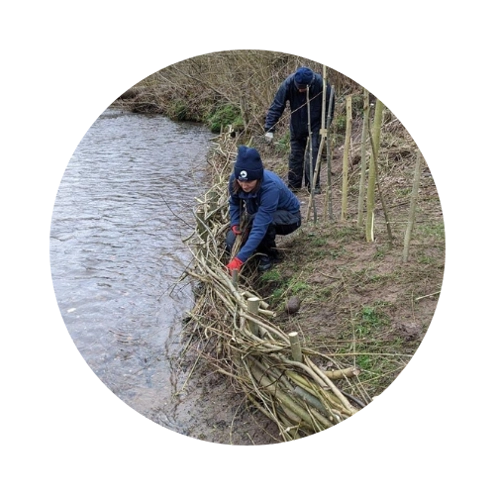
Volunteer & River Guardians Hub
Visit the Volunteer & River Guardians Hub
Citizen Science Hub
Visit the Citizen Science Hub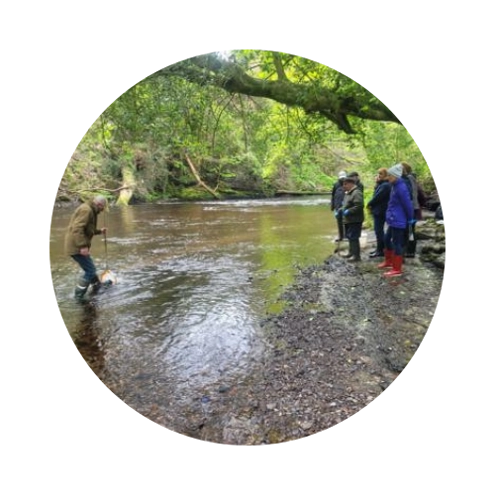
Natural Flood Management

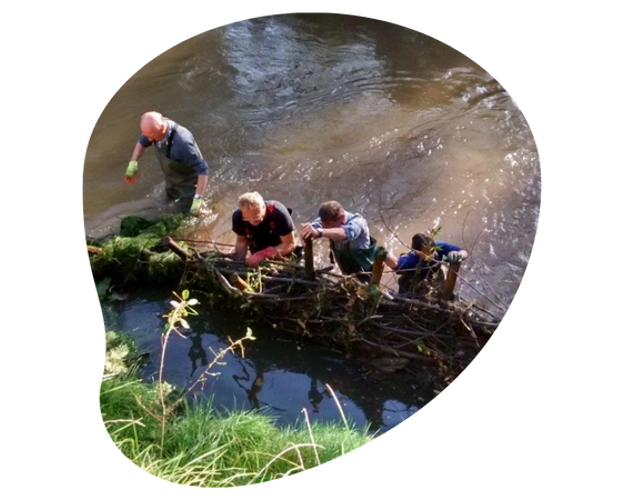
Leaky Dams
Woody debris in river channels and ditches to slow the flow of water downstream.
SuDS
Sustainable Drainage Systems (SuDS)
Provide temporary flood storage and slowly release water back into the river.

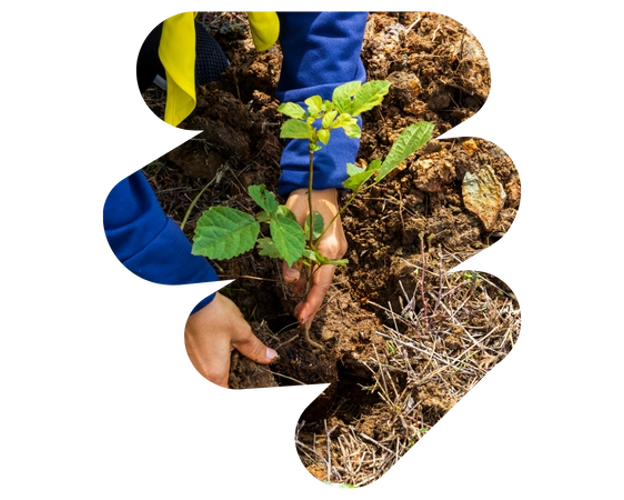
Woodland Planting
Slows the flow, helps reduce sediment delivery to the watercourse and reduces bankside erosion.

Re-naturalising Rivers
Creating meanders and reconnecting to the floodplain to help slow and store water.

Education
Misconnections
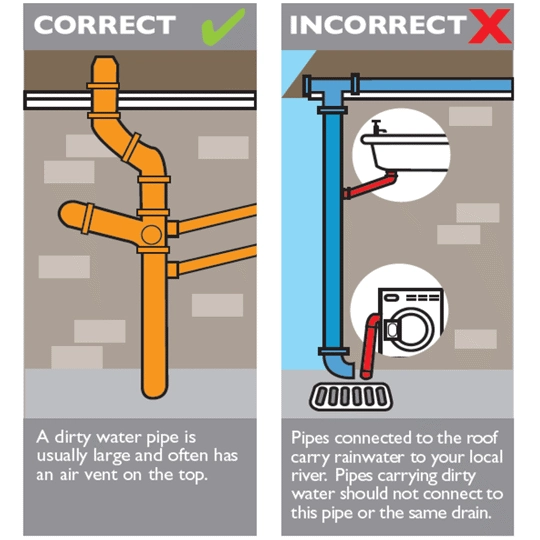
If your plumbing is not properly connected, dirty water from showers, baths, toilets, washing machines and dishwashers could flow into your local stream or river. This is called a misconnection. Misconnections can cause water pollution and can happen when water-using appliances are not plumbed in correctly to the right pipe. This may occur when new houses are built, or when they are extended or when a new appliance is installed in any house.
Mersey Rivers Trust engages with the public to raise awareness of the impacts of misconnections on rivers, people and wildlife. We have created a misconnections leaflet explaining how the public can check their plumbing connections.
Call of Nature
Call of Nature is the campaign to prevent pollution in our rivers and watercourses caused by poorly maintained septic tanks and small package sewage treatment systems.
If septic tanks, cesspits and package sewage treatment systems are not looked after, they’ll start to fail. This means they’ll start to smell, spread disease to humans and animals, and pollute our local rivers and seas.
Public Engagement
We carry out visits to schools, community groups and attend various public events to explain how the public can play their part in protecting the river environment.

Invasive Non-Native Species Control
Mersey Rivers Trust controls a number of invasive non- native plant species across the Mersey Basin.
Himalayan Balsam
Is controlled through manual hand-pulling where plants are pulled out before they set seed to prevent further spread along riverbanks and waterways.
Giant Hogweed
Requires herbicide spraying on foliage to kill the plant and deplete its long-lasting seed bank, using protective equipment due to its sap that causes severe skin burns.
Japanese Knotweed
Treated using stem injection, where herbicide is directly injected into the hollow stems to translocate through the extensive underground rhizome system and achieve long-term control.
Rhodedendron
Is managed by cutting back the stems and then digging out or excavating the roots and stumps to prevent regrowth.

Farm Advice
Mersey Rivers Trust provides farm advice throughout the Mersey Basin promoting water friendly farming, identifying interventions that will help the environment while also helping farm businesses!
Here are some of the interventions which we recommend.

Rainwater Harvesting
Collecting rain water provides free, clean water supply and storage for use during periods of low rainfall.

Watercourse Fencing
Watercourse fencing reduces poaching and direct nutrient input from livestock. It also benefits foot health, reduces injury risk and spread of disease.

Cover Crops
Fast growing crops grown in between main crops reduce soil erosion and improve soil quality. Undersowing a companion crop with maize can reduce soil erosion and nutrient loss/leaching.

Hedge planting
Hedges can provide a barrier for livestock, water and sediment whilst creating a habitat for wildlife.
Habitat Creation and Restoration

Wetland ponds and scrapes
Wetland habitats such as ponds and scrapes support and provide habitat for a wide variety of wildlife including invertebrates, amphibians, mammals and aquatic plants. They also provide feeding areas for wading birds. In addition, they store carbon and can reduce flood risk further downstream.

Willow spiling
Willow spiling is a riverbank protection technique that involves driving live willow stakes vertically into the riverbank and weaving them horizontally with living willow rods to form a sturdy, natural revetment that stabilises the soil, reduces erosion, and naturally reinforces itself as the willow roots and grows.

Large woody debris
Large Woody Debris (LWD) is an important component of a river’s anatomy, used to bolster habitat and moderate river flow in high energy channels.
LWD structures provide food and cover for a variety of aquatic organisms that, in turn, feed fish and other animals further up the food chain.
Citizen Science
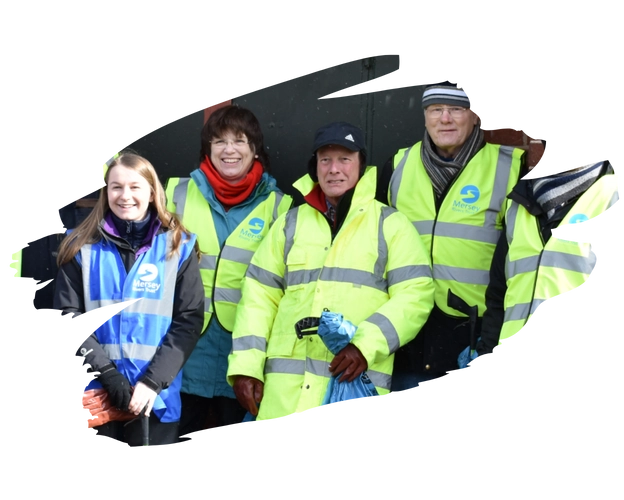
Volunteers are vital to the work of Mersey Rivers Trust, as without them, we would not be able to achieve even half of our objectives. As a trust, we cover the whole of the Mersey Basin, and so our volunteers vastly increase the capacity of our trust by being our eyes and ears on the ground in various ways.

Riverfly Monitoring
Disturbing the material on the riverbed to release invertebrates, and collecting them using a net. The species and quantities of invertebrates present provide an insight into the health of the river.

Outfall Safaris
Walkover surveys to locate outfalls and identify types of point source pollution. This information gives us an idea of what is entering the river and potential water quality issues that may occur.

MoRPH Surveys
A geomorphological survey to look at the way river flows, why the river flows in certain ways, and obstacles to the river flow.

Water Sampling
To monitor the water quality of local rivers. Volunteers test the water for nitrate, phosphate, ammonia, turbidity and temperature.
Fish pass/Weir removal
Dams and weirs
provide a barrier to fish migration up and down rivers. Fish ladders or bypasses provide a shallow, alternative route for fish either alongside the weir or as a separate channel diverting away from the main river.
Weir removal an alternative option
This is often the favoured option, however, not always possible, particularly if the weir is large or is used for harnessing hydroelectric power or the weir is used to carry pipes or forms part of river bank infrastructure,
Enhancing fish migration
Fish migration is part of the Water Framework Directive (WFD) and the presence of river barriers to migration affects the WFD ecological status of a watercourse. The Mersey Rivers Trust has a Fisheries Action Plan to work with partners to address river barriers to allow free migration of fish and allow the return of salmon and eel across our rivers.